How to Repair a Damaged Skin Barrier: Signs, Causes & Recovery Routine
If your skin suddenly stings when you apply products you’ve used for months, feels tight no matter how much moisturizer you apply, or looks flaky and irritated for no obvious reason — there’s a good chance your skin barrier is compromised. This is one of the most common (and most fixable) skin problems, and it’s also one of the most over-treated, because the instinct to “do more” is usually exactly the wrong move.
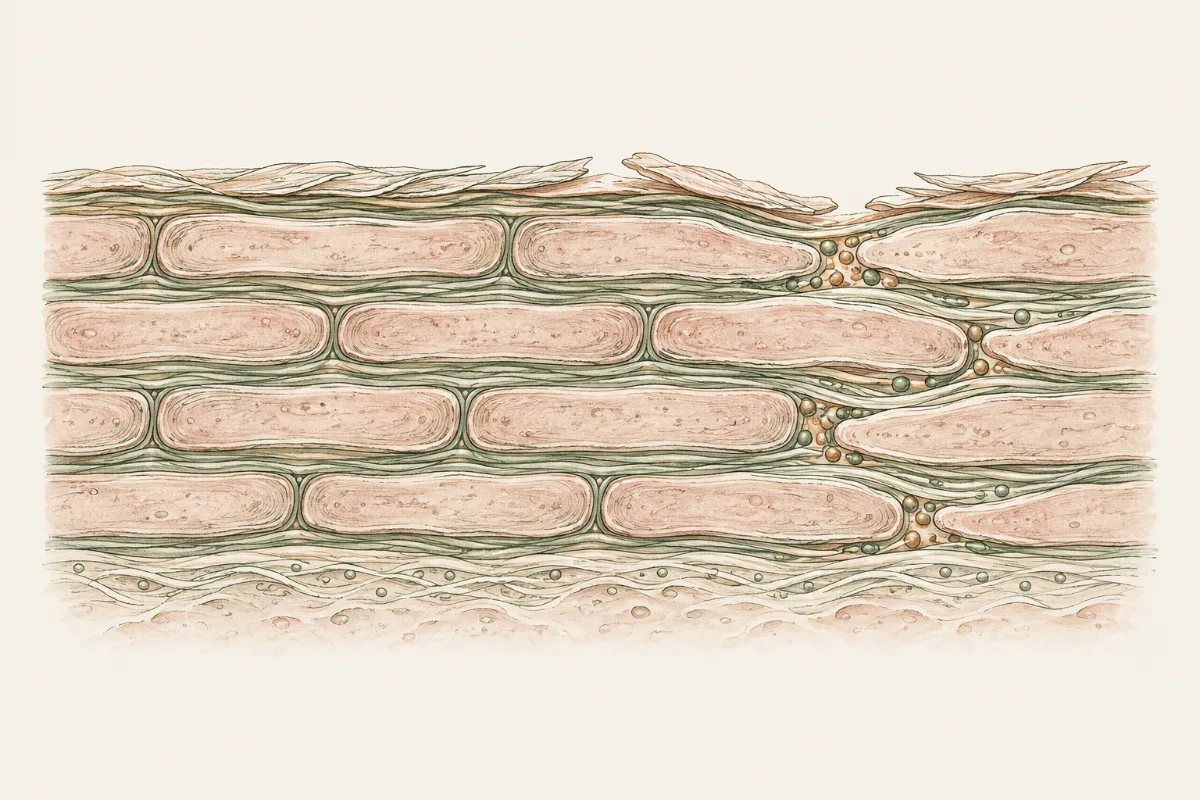
What the skin barrier actually is
Stratum-corneum structure and barrier lipids: Barrier lipid organization review (PubMed).
The stratum corneum contains skin cells within an organized lipid matrix that includes ceramides, cholesterol and free fatty acids. This structure helps limit water loss. Lipid proportions depend on how they are measured; “equal” and “3:1:1” are not interchangeable, and a single commercial ratio does not establish superior repair for everyone.
When that lipid matrix is intact, it keeps water in and irritants, allergens, and bacteria out. When it’s damaged, water escapes too easily (called transepidermal water loss, or TEWL) and the same irritants have an easier time getting in — which is why damaged-barrier skin tends to be both dehydrated and reactive at the same time.
Signs of a damaged skin barrier
Overlapping symptoms and when diagnosis is needed: AAD contact-dermatitis symptoms; AAD dermatitis diagnosis and treatment.
- Stinging or burning when you apply products that never used to bother you
- Persistent tightness, even right after moisturizing
- Flaking or rough texture
- Redness that doesn’t have an obvious trigger
- New breakouts alongside dryness — a confusing combination, but a real one
- Skin that looks dull or feels rough to the touch
For a full symptom-by-symptom checklist, see Signs of a Damaged Skin Barrier.
What usually causes it
- Over-exfoliation — using acids or scrubs too often, or stacking several exfoliating products at once. Covered in depth in Over-Exfoliated Skin: How to Fix It
- Retinoid overuse — starting too strong or too frequently. See Retinol-Damaged Skin: How to Fix and Reintroduce It, including the important distinction between normal “purging” and actual irritation, explored further in Purging vs. Breakout: How to Tell the Difference
- Over-cleansing — hot water, harsh foaming cleansers, or double-cleansing more than your skin needs
- Environmental stress — harsh winter air, excessive sun exposure, or extended pool/ocean exposure without protection
- Combining too many actives at once — retinoids, vitamin C, and exfoliating acids in the same routine, applied without spacing them out
The repair routine: less is more
Gentle care, formulation and nicotinamide research: AAD dry-skin care; Ceramide formulation review (PubMed); Nicotinamide laboratory and skin study (PubMed).
Use gentle skin care and avoid cosmetics that continue to irritate. A fragrance-free cleanser, tolerated cream or ointment, and sun protection form a simple framework. Ask your prescriber before changing prescribed treatment.
Ceramides and other barrier lipids matter, but complete formulation and tolerability matter more than a brand name, price or ingredient-list position. Nicotinamide studies include laboratory increases in lipid synthesis; a several-fold cell-culture result is not a promised effect from a serum.
See the gentle-care routine and ingredient evidence. Persistent symptoms may reflect dermatitis or another condition needing assessment.
Products mentioned in this guide
Dermlore may earn a commission from qualifying purchases made through links on this page, at no additional cost to you. As an Amazon Associate I earn from qualifying purchases.
- Vanicream Gentle Facial Cleaner, pH-Balanced Face Wash, 8 Fl Oz — Vanicream · 8 fl oz. Fragrance-free facial cleanser; 8 fl oz.
- CeraVe Moisturizing Cream, Face & Body Moisturizer for Dry Skin, 19oz — CeraVe · 19 oz. Face and body cream with ceramides; 19 oz.
- CeraVe Hydrating Mineral Sunscreen SPF 30 with Hyaluronic Acid, 2.5oz — CeraVe · 2.5 oz. Mineral face sunscreen labeled SPF 30; 2.5 oz.
How long does it actually take?
Recovery depends on the cause, ongoing exposure and any underlying condition. There is no universal severity-based two-to-six-week schedule or reliable date when the lipid matrix is fully restored. Seek assessment for persistent or worsening symptoms, and promptly for substantial pain, swelling, oozing or a spreading rash.
See why recovery timelines vary.
Can you still use actives while your barrier heals?
Generally, no — not right away. Retinoids and exfoliating acids are common causes of barrier damage, and using them during recovery slows healing. Most dermatology guidance recommends pausing actives for the first 1–2 weeks of a repair routine, then reintroducing them slowly, one at a time. We cover the full decision tree in Can I Use Retinol With a Damaged Skin Barrier?.
Preventing it from happening again
Once your barrier has recovered, the goal shifts from repair to maintenance — see How to Strengthen a Sensitive Skin Barrier Long-Term for the ongoing version of this routine, especially if you regularly use retinoids or acids and want to avoid another round of damage.
FAQ
Is a damaged skin barrier the same as sensitive skin?
Not exactly — some people have naturally reactive skin, while barrier damage is an acquired, usually temporary state caused by something specific. That said, a damaged barrier often feels like suddenly having sensitive skin, and the repair approach is similar either way.
Can I still wear makeup while my barrier heals?
Generally yes, but choose fragrance-free, minimal formulas, and make sure you’re removing it gently rather than with harsh wipes or double-cleansing.
Will my skin barrier repair itself if I just stop everything?
Often it improves, but pairing that pause with lipid-replenishing ingredients (rather than plain moisturizer alone) speeds recovery meaningfully, based on the clinical research on ceramide-based formulations cited above.
More skin barrier guides
References
- The skin barrier: An extraordinary interface with an exceptional lipid organization Progress in Lipid Research · 2023
- Dermatologists’ top tips for relieving dry skin American Academy of Dermatology
- The role of ceramides in skin barrier function and the importance of their correct formulation for skincare applications International Journal of Cosmetic Science · 2024
- Nicotinamide increases biosynthesis of ceramides as well as other stratum corneum lipids to improve the epidermal permeability barrier British Journal of Dermatology · 2000
- Eczema types: Contact dermatitis signs and symptoms American Academy of Dermatology
- Eczema types: Contact dermatitis diagnosis and treatment American Academy of Dermatology
Dermlore provides general educational information, not personal medical advice, diagnosis or treatment. Reading this site does not create a doctor–patient relationship. Consult a qualified healthcare professional for advice about your circumstances. Medical disclaimer.