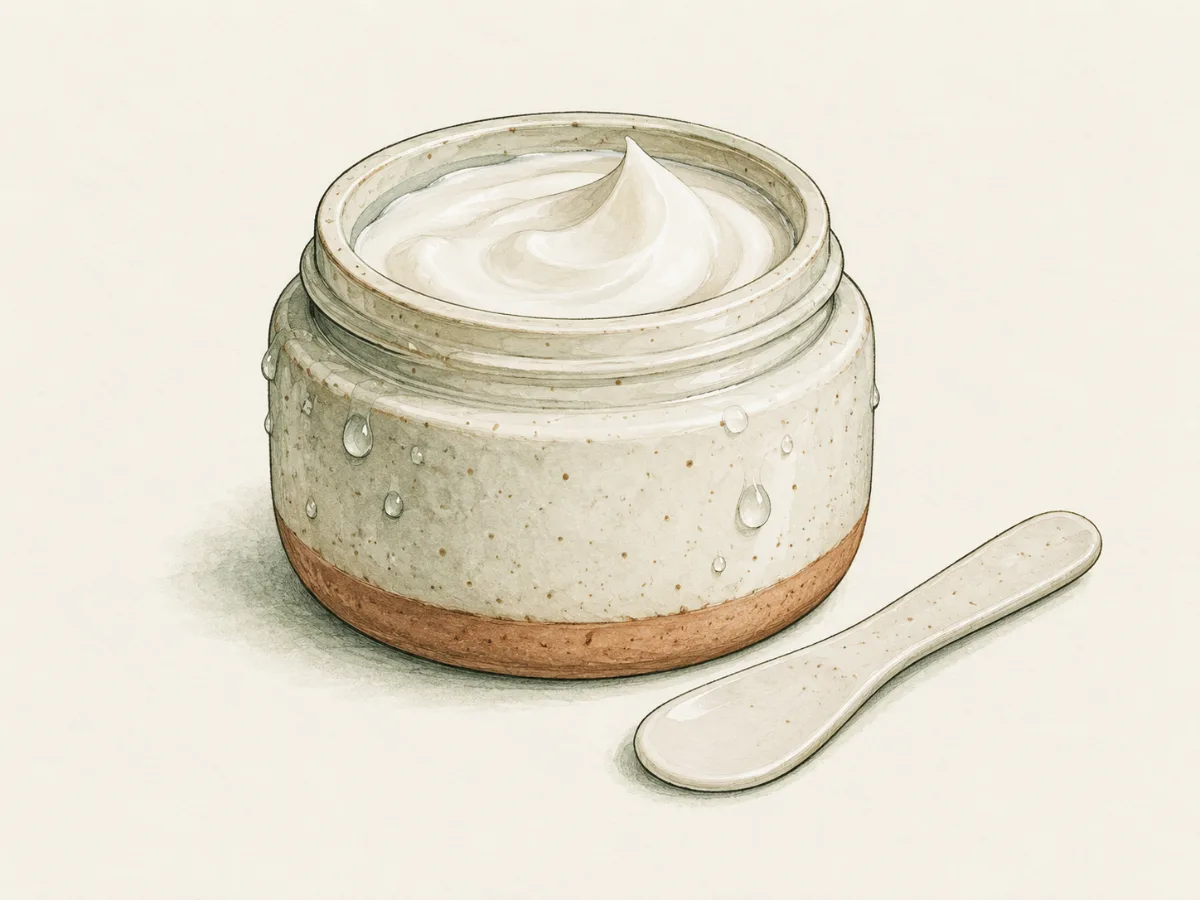
How to Choose a Moisturizer for Perimenopausal Skin
The moisturizer that worked for your skin in your 30s is often not enough once perimenopause changes how much oil your skin produces and how well it holds onto moisture. Here’s what to look for in a moisturizer and how to choose a formula that fits drier, more reactive skin.
What perimenopausal skin needs from a moisturizer
Dryness, barrier lipids and formulation limits: AAD menopause skin care; Barrier lipid organization review (PubMed); Ceramide formulation review (PubMed).
Ceramides, cholesterol and free fatty acids are important barrier lipids. Their organization and a moisturizer’s complete formulation matter. There is no single commercial ratio, ingredient-list position or price that establishes superior repair for everyone. Humectants help retain water; creams and ointments can reduce dryness.
How to choose a formula
Choose a fragrance-free cream or ointment that your skin tolerates, taking account of texture, acne tendency and known allergies. Product labels and formulations can change. A brand name or “barrier repair” claim does not establish comparative clinical effectiveness; this guide does not rank products as proven treatments for a diagnosed disorder.
Dermlore may earn a commission from qualifying purchases made through links on this page, at no additional cost to you. As an Amazon Associate I earn from qualifying purchases.
Products mentioned in this guide
Dermlore may earn a commission from qualifying purchases made through links on this page, at no additional cost to you. As an Amazon Associate I earn from qualifying purchases.
- CeraVe PM Daily Facial Moisturizer, Skin Care for Dry Skin, Oil-Free, 3oz — CeraVe · 3 oz. Facial lotion with ceramides; 3 oz.
- CeraVe Moisturizing Cream, Face & Body Moisturizer for Dry Skin, 19oz — CeraVe · 19 oz. Face and body cream with ceramides; 19 oz.
- Vanicream Daily Facial Moisturizer, Lightweight, Non-Greasy, 3 Fl Oz — Vanicream · 3 fl oz. Facial lotion listing ceramides and hyaluronic acid; 3 fl oz.
How to use it
Moisturizer use and gentle care: AAD dry-skin care.
- Morning: apply after any treatment serum, before sunscreen
- Evening: apply as the last step of your routine, over any actives you’re using
- Consider a richer, more occlusive layer (even a plain petrolatum-based balm over problem areas) on nights when your skin feels especially dry or after using a retinoid
For the full step-by-step routine this fits into, see Perimenopause Skincare Routine.
What to avoid
- Fragranced formulas, which are more likely to irritate skin that’s already more reactive during this transition — see Perimenopause Skin Sensitivity and Redness
- Gel-based, water-heavy moisturizers alone — fine as a hydration layer, but not sufficient on their own if your barrier needs lipid support
- Switching moisturizers too frequently — barrier-supporting ingredients like ceramides work cumulatively; give a product 3–4 weeks before judging it
A note on SPF
Whatever moisturizer you choose, it doesn’t replace sunscreen. UV exposure accelerates the same collagen breakdown that estrogen decline is already causing — see our Perimenopause Skin Care Guide for how these two factors compound each other, and consider a moisturizer-and-SPF combination like Colorescience’s mineral formulas if you want to simplify your morning routine to fewer steps.
FAQ
Do I need a separate night cream, or can I use the same moisturizer day and night?
The same ceramide-rich moisturizer can usually work for both, as long as you’re applying sunscreen separately in the morning. A richer, more occlusive option at night is a nice-to-have, not a requirement.
Is a more expensive moisturizer actually better for this?
Not necessarily. Price differences often come down to texture, added ingredients such as peptides, and packaging. Compare ingredient lists rather than prices: look for a fragrance-free formula that lists ceramides, cholesterol and fatty acids, and that your skin tolerates.
How long before I notice a difference?
Initial comfort improvements are often noticeable within days, but meaningful changes in overall skin texture and hydration typically take 3–4 weeks of consistent use.
References
- Caring for your skin in menopause American Academy of Dermatology
- The skin barrier: An extraordinary interface with an exceptional lipid organization Progress in Lipid Research · 2023
- The role of ceramides in skin barrier function and the importance of their correct formulation for skincare applications International Journal of Cosmetic Science · 2024
- Dermatologists’ top tips for relieving dry skin American Academy of Dermatology
Dermlore provides general educational information, not personal medical advice, diagnosis or treatment. Reading this site does not create a doctor–patient relationship. Consult a qualified healthcare professional for advice about your circumstances. Medical disclaimer.