Perimenopause Skin Sensitivity and Redness
If products you’ve used for years are suddenly causing redness or a burning sensation, this is one of the most common — and most misunderstood — perimenopausal skin changes.
Why skin becomes more reactive
Menopause-related skin changes: Estrogen and skin review (PubMed); AAD menopause skin care.
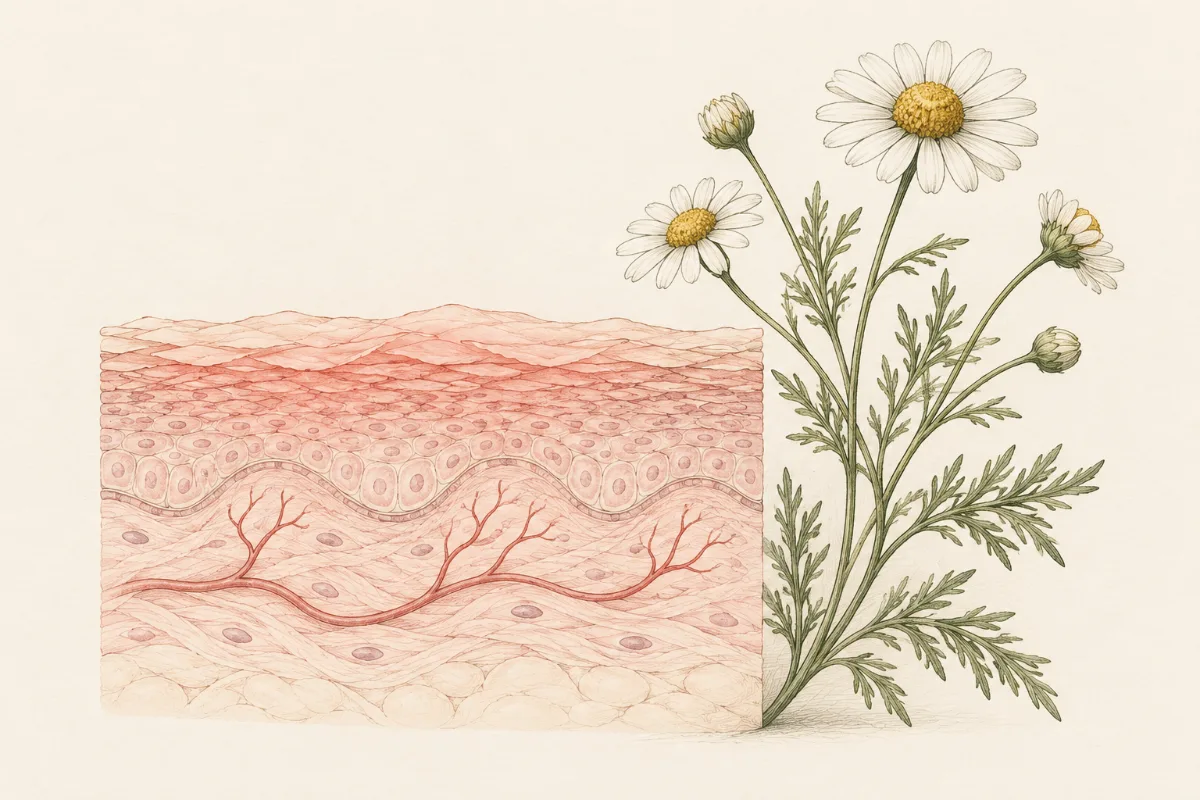
Estrogen supports ceramide production, the lipids that make up your skin’s protective barrier. As estrogen declines during perimenopause, that barrier weakens, becoming more permeable — meaning irritants penetrate more easily and products that were previously well-tolerated can suddenly cause a reaction. Falling estrogen also affects blood vessel behavior in the skin, which is part of why flushing and visible redness become more common at this life stage, sometimes alongside hot flashes.
How this differs from dryness alone
Dryness and sensitivity often arrive together during perimenopause, but they’re not identical. Dryness is primarily about reduced oil and water content; sensitivity is about a weakened barrier reacting more easily to triggers — products, temperature changes, even friction. You can have one without the other, though most people notice both to some degree. See Why Is My Skin So Dry in Perimenopause? for the hydration side of this picture.
Is this the same as barrier damage?
Often, yes, functionally — a weakened barrier is a weakened barrier, regardless of what triggered it. If your sensitivity is severe (persistent stinging, flaking, or a “sunburned” feeling), it’s worth reading our full Skin Barrier Repair guide, since the repair approach (simplifying your routine, prioritizing lipid-rich products) applies directly.
What helps
Gentle care and investigation of persistent reactions: AAD dry-skin care; AAD dermatitis diagnosis and treatment.
- Simplify before adding. If your skin has become newly reactive, the instinct to add a “calming” product on top of everything else usually backfires — reduce your routine to the essentials first
- Choose fragrance-free, minimal-ingredient formulas. Fragrance is one of the most common irritants for increasingly sensitive skin
- Prioritize ceramides. A moisturizer built around ceramides, cholesterol, and fatty acids helps rebuild the barrier that’s driving the sensitivity in the first place — see Best Moisturizer for Perimenopausal Skin
- Reduce active ingredient frequency, particularly retinoids and exfoliating acids, rather than eliminating them — see Is Retinol Safe During Perimenopause?
Dermlore may earn a commission from qualifying purchases made through links on this page, at no additional cost to you. As an Amazon Associate I earn from qualifying purchases.
Related Dermlore guidance
Products mentioned in this guide
Dermlore may earn a commission from qualifying purchases made through links on this page, at no additional cost to you. As an Amazon Associate I earn from qualifying purchases.
- Vanicream Daily Facial Moisturizer, Lightweight, Non-Greasy, 3 Fl Oz — Vanicream · 3 fl oz. Facial lotion listing ceramides and hyaluronic acid; 3 fl oz.
- CeraVe Moisturizing Cream, Face & Body Moisturizer for Dry Skin, 19oz — CeraVe · 19 oz. Face and body cream with ceramides; 19 oz.
FAQ
Will my skin always be this reactive now?
Not necessarily at this intensity — many people find sensitivity eases somewhat once their routine is adjusted and skin stabilizes post-menopause, though skin generally remains a bit more delicate than it was in earlier decades.
Should I stop using all my usual products?
Not all at once — simplify to the essentials (gentle cleanser, ceramide moisturizer, SPF) for a couple of weeks, then reintroduce other products one at a time to identify what’s genuinely well tolerated now.
Is redness during perimenopause always related to hot flashes?
Not always — it can be purely a skin-barrier issue, purely vasomotor (hot-flash-related), or both together. If redness is persistent and bothersome, it’s worth mentioning to your doctor as part of your broader perimenopause symptoms, not just a skincare concern.
References
- Estrogen and skin: therapeutic options American Journal of Clinical Dermatology · 2011
- Caring for your skin in menopause American Academy of Dermatology
- Dermatologists’ top tips for relieving dry skin American Academy of Dermatology
- Eczema types: Contact dermatitis diagnosis and treatment American Academy of Dermatology
Dermlore provides general educational information, not personal medical advice, diagnosis or treatment. Reading this site does not create a doctor–patient relationship. Consult a qualified healthcare professional for advice about your circumstances. Medical disclaimer.