Perimenopause vs. Menopause: Skin Changes
The terms get used almost interchangeably, but perimenopause and menopause are distinct stages — and knowing which one you’re in helps set realistic expectations for your skin.
The definitions
Menopausal-transition definitions: NIH menopause definitions.
Perimenopause is the transition leading up to menopause — hormone levels fluctuate rather than steadily decline, periods become irregular, and it typically starts in your 40s, though it can begin as early as your mid-30s for some women. This phase can last several years.
Menopause is a single point in time, defined as 12 consecutive months without a period. Everything after that is technically “postmenopause,” though it’s commonly still referred to as menopause in everyday conversation.
How skin changes differ between the two
Menopause-related changes and individual variation: AAD menopause skin care; Estrogen and skin review (PubMed).
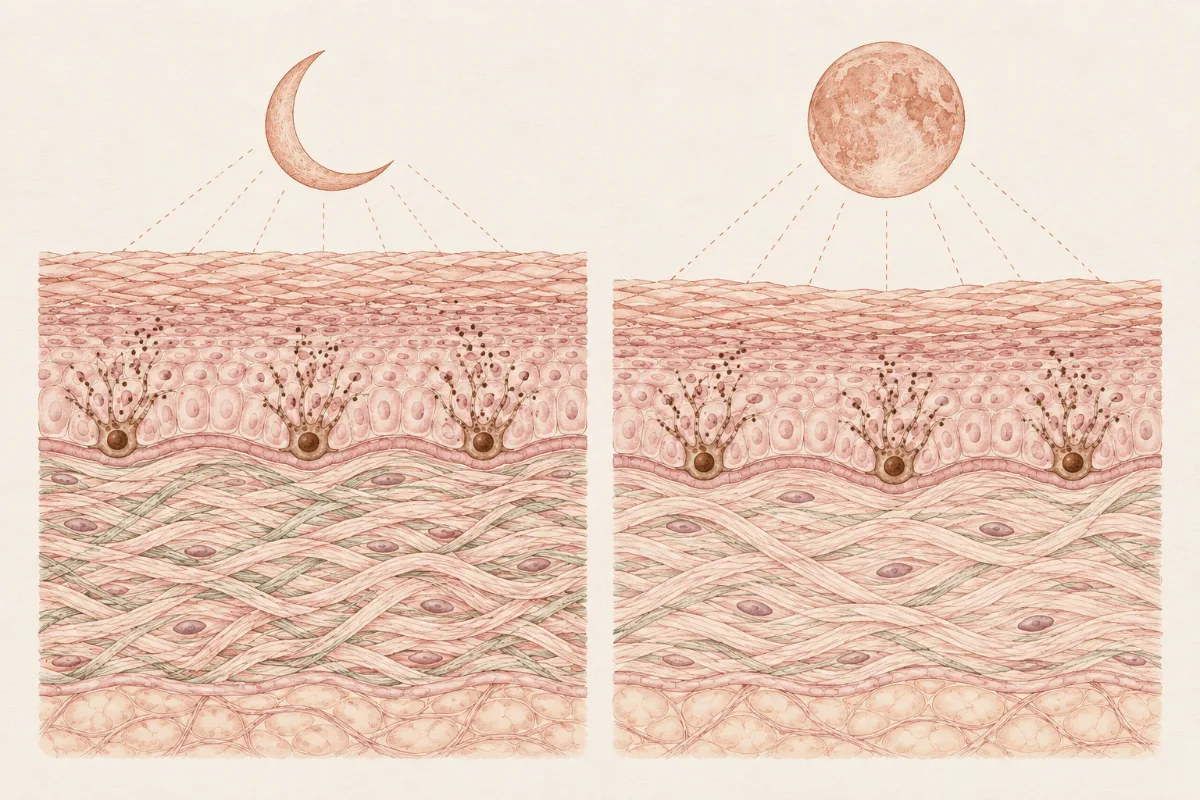
During perimenopause, skin changes tend to be more variable, mirroring the fluctuating hormone levels — you might notice dryness one month and a breakout the next, since androgen and estrogen levels aren’t moving in a straight line yet. This is part of why perimenopausal skin can feel unpredictable and harder to plan a routine around compared to a steadier, more gradual decline.
Once you’re postmenopausal, estrogen has dropped to a consistently low level, and the changes become more steadily progressive rather than fluctuating — this is when the more dramatic collagen loss occurs (roughly 30% in the first five years after menopause), along with continued, more predictable dryness, thinning, and elasticity loss.
What stays the same
Regardless of which stage you’re in, the underlying driver — declining estrogen and its effects on collagen, ceramide production, and oil glands — is the same, and the general approach to skincare doesn’t fundamentally change between the two stages. The core routine covered in our Perimenopause Skincare Routine applies whether you’re in the fluctuating early transition or several years postmenopausal.
Does it matter which stage you’re in for treatment decisions?
Mostly not for skincare specifically — a ceramide-rich moisturizer, sensible retinoid use, and daily SPF matter at every stage of this transition. Where it matters more is for hormone-related medical decisions (like whether hormone therapy is appropriate), which is a conversation with your doctor informed by where you actually are in the transition, not something to self-assess from skin changes alone.
Products mentioned in this guide
Dermlore may earn a commission from qualifying purchases made through links on this page, at no additional cost to you. As an Amazon Associate I earn from qualifying purchases.
- CeraVe Moisturizing Cream, Face & Body Moisturizer for Dry Skin, 19oz — CeraVe · 19 oz. Face and body cream with ceramides; 19 oz.
FAQ
How do I know if I’m in perimenopause or already menopausal?
The 12-consecutive-months-without-a-period marker is the clearest indicator, though period irregularity during perimenopause can make this hard to track precisely — your doctor can help clarify based on your full symptom picture, not skin changes alone.
Can skin changes start before periods become irregular?
Yes — hormonal fluctuations underlying perimenopause can begin before period changes become noticeable, so skin changes are sometimes an earlier sign for some women.
Does skin ever “stabilize” after menopause?
The dramatic rate of change slows once the postmenopausal collagen loss curve flattens out (after the first several years), but skin continues gradually aging afterward, just less abruptly than during the transition itself.
References
- What Is Menopause? National Institute on Aging
- Caring for your skin in menopause American Academy of Dermatology
- Estrogen and skin: therapeutic options American Journal of Clinical Dermatology · 2011
Dermlore provides general educational information, not personal medical advice, diagnosis or treatment. Reading this site does not create a doctor–patient relationship. Consult a qualified healthcare professional for advice about your circumstances. Medical disclaimer.