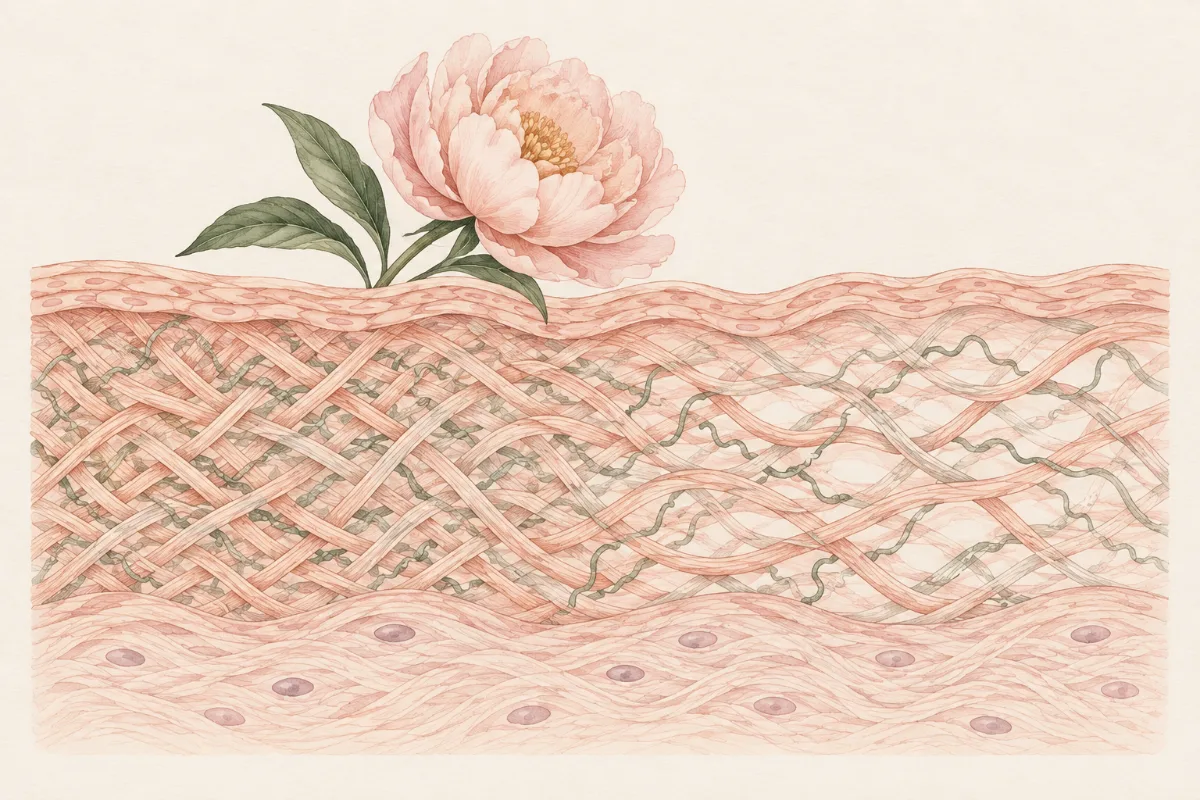
Skin Firmness and Elasticity in Perimenopause
Loss of firmness is one of the most direct, measurable consequences of the collagen decline that comes with perimenopause — and it’s also one of the areas where skincare has genuine, research-backed tools to help.
The collagen connection
Reported menopause-related collagen changes: AAD menopause skin care; Estrogen and skin review (PubMed).
Menopause-related estrogen changes can affect skin structure and collagen. AAD patient guidance reports approximately 30% collagen loss in the first five years after menopause and about 2% annually thereafter. These are reported group-level estimates, not a measurement or prediction for an individual. Sun exposure and other aging-related factors also matter.
What actually has evidence behind it
Photoaging evidence is strongest for studied prescription formulations: Tretinoin trial review (PubMed); AAD retinoid guidance.
Retinoids
Prescription tretinoin has evidence for improving some visible signs of photoaging. The cited review does not compare tretinoin with every topical option or establish that its effect is independent of estrogen status. Retinoids may irritate some people, so suitability and use should be discussed with a dermatologist, especially if your skin is already inflamed or very dry. See Is Retinol Safe During Perimenopause? for more context.
Peptides
Signal molecules that support fibroblast activity and collagen production. The evidence base is smaller than for retinoids, but peptides are well-tolerated and reasonable to combine with retinoid use rather than choosing one or the other.
Vitamin C
Beyond its antioxidant and pigment-fading properties, vitamin C facilitates collagen synthesis directly and is a reasonable morning-routine addition alongside evening retinoid use.
Products mentioned in this guide
Dermlore may earn a commission from qualifying purchases made through links on this page, at no additional cost to you. As an Amazon Associate I earn from qualifying purchases.
- Timeless 20% Vitamin C + E Ferulic Acid Serum, Antioxidant, 1.7 fl oz — Timeless Skin Care · 1.7 fl oz. Serum labeled 20% vitamin C with vitamin E and ferulic acid; 1.7 fl oz.
- CeraVe Skin Brightening Vitamin C Serum for Face with Hyaluronic Acid, 1oz — CeraVe · 1 oz. Vitamin C serum with hyaluronic acid; 1 oz.
Topical estrogen (estriol)
A small 1996 study compared specific topical estradiol and estriol preparations over six months and reported changes in selected skin measures. It does not establish the effectiveness or long-term safety of other preparations or currently marketed compounded creams. No FDA-approved drug containing estriol is available in the United States. Do not start a hormone product for skin aging without discussing it with a qualified clinician. See Estriol Cream for Skin for the evidence review.
Related Dermlore guidance
What doesn’t have strong evidence
Evidence for oral collagen supplements and many firming cosmetic products varies by formulation, study design and outcome. Prescription tretinoin has trials for some photoaging outcomes, but this does not prove it is the best option for every person or that it prevents menopause-related collagen loss. Discuss treatment choices with a qualified clinician.
A realistic timeline
Visible changes in photoaging outcomes may take time and differ by product, use and baseline skin. The cited review does not define a perimenopause-specific starting window or guarantee firmness improvement. Follow product or prescriber guidance for when to reassess.
FAQ
Is it too late to start if I’m already postmenopausal?
No — research on postmenopausal women specifically still shows meaningful collagen response to retinoid use, even though starting earlier in perimenopause offers a longer window of benefit.
Do firming creams and devices actually work?
Results vary considerably and evidence is generally weaker than for topical retinoids — they’re not harmful to try, but shouldn’t replace a retinoid-based routine if firmness is your priority.
Should I consider in-office procedures instead of skincare?
Procedures like radiofrequency or laser treatments can offer more dramatic results faster, but that’s a separate conversation with a dermatologist — topical care remains a reasonable, lower-cost first step or ongoing maintenance alongside procedures.
References
- Caring for your skin in menopause American Academy of Dermatology
- Estrogen and skin: therapeutic options American Journal of Clinical Dermatology · 2011
- Topical tretinoin for treating photoaging: A systematic review of randomized controlled trials International Journal of Women’s Dermatology · 2022
- Retinoid or retinol? American Academy of Dermatology
Dermlore provides general educational information, not personal medical advice, diagnosis or treatment. Reading this site does not create a doctor–patient relationship. Consult a qualified healthcare professional for advice about your circumstances. Medical disclaimer.