How to Fade Acne Scars and Dark Marks
“Acne scars” actually covers two very different things — and knowing which one you have changes what’s worth trying.
Dark marks vs. true scars
Flat discoloration versus textured scars: AAD acne-scar guidance.
Flat marks left after a pimple heals are not structural scars, and they come in two kinds:
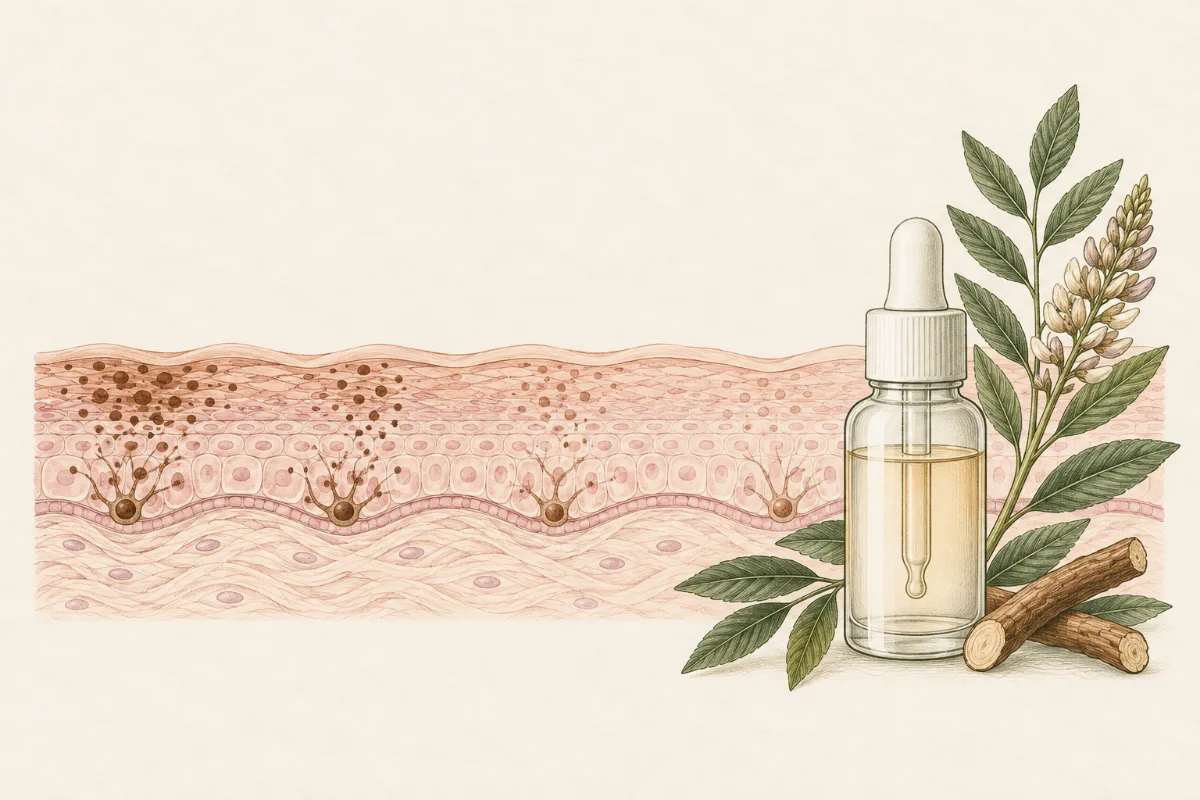
- Post-inflammatory hyperpigmentation (PIH) — brown, dark-brown or grey-brown marks. This is extra pigment deposited during healing, and it is more common and longer-lasting in medium and darker skin tones.
- Post-inflammatory erythema (PIE) — red, pink or purple marks. These come from small blood vessels left dilated after inflammation, not from pigment, and they are more common in lighter skin tones.
Both usually fade on their own over months, but they respond to different things — which is why telling them apart matters.
True acne scars involve actual structural changes to the skin — ice pick scars (narrow, deep indentations), boxcar scars (broader, shallower depressions), and rolling scars (uneven, wave-like texture). These don’t resolve with topical products alone and generally require in-office treatment.
Most of what people call “acne scars” — flat marks that are brown (PIH) or red, pink or purple (PIE) rather than textured or indented — are not true scars, which is the good news: they usually fade with time, and brown marks in particular respond to consistent home care.
What works for PIH
Evidence for selected pigment treatments: 15% azelaic-acid trial (PubMed); Tretinoin trial for post-acne dark marks (PubMed).
| Ingredient | How it helps | Timeline |
|---|---|---|
| Vitamin C | Inhibits melanin production, antioxidant support | Visible fading in 8–12 weeks |
| Retinoids | Speeds cell turnover, helps shed pigmented cells | Gradual, several weeks to months |
| Azelaic acid | Inhibits melanin, mild exfoliation, anti-inflammatory | 8–12 weeks |
| Daily SPF | Prevents existing marks from darkening further | Ongoing — essential alongside any of the above |
Red or purple marks (PIE) are different: the ingredients in the table mainly target pigment, so they help brown marks more than red ones. Red marks fade mainly with time, daily sun protection and avoiding irritation; if they persist for many months, a dermatologist can discuss in-office options such as vascular laser.
For brown marks, consistent daily use matters more than any single “best” ingredient — many people notice some lightening within 4–6 weeks and more fading by 8–12 weeks. Deeper or longer-standing marks can take 6–12 months to fully resolve. See our azelaic acid guide for more on that specific ingredient, since it does double duty for both active breakouts and the marks they leave behind.
Related Dermlore guidance
Products mentioned in this guide
Dermlore may earn a commission from qualifying purchases made through links on this page, at no additional cost to you. As an Amazon Associate I earn from qualifying purchases.
- The Ordinary Azelaic Acid Suspension 10%, Formula for Uneven and Blemish-Prone Skin — The Ordinary · 1 oz, pack of 1. Azelaic acid 10% suspension; 1 oz tube.
- Timeless 20% Vitamin C + E Ferulic Acid Serum, Antioxidant, 1.7 fl oz — Timeless Skin Care · 1.7 fl oz. Serum labeled 20% vitamin C with vitamin E and ferulic acid; 1.7 fl oz.
- CeraVe Hydrating Mineral Sunscreen SPF 30 with Hyaluronic Acid, 2.5oz — CeraVe · 2.5 oz. Mineral face sunscreen labeled SPF 30; 2.5 oz.
What topical products won’t fix
Indented, pitted or raised acne scars differ from flat post-acne discoloration. A dermatologist can assess the scar type and discuss an individual plan; selected options may include procedures such as microneedling, chemical peels or laser treatment. See the AAD acne-scar treatment guidance for how options differ by scar type.
Preventing new marks
The best treatment for PIH is preventing it in the first place:
- Avoid picking or popping breakouts, which significantly increases scarring risk
- Treat active acne promptly rather than letting inflammation linger — see our skincare routine for hormonal acne
- Never skip SPF, especially while treating existing marks
FAQ
How do I know if I have PIH or a true scar?
Run your fingertip lightly over the area with your eyes closed — if the skin feels smooth and even, it’s likely PIH (discoloration only). If you can feel a dip, ridge, or texture change, that’s more consistent with structural scarring.
Can vitamin C and retinoids be used together for marks?
Generally yes, though many people find it more comfortable to use vitamin C in the morning and a retinoid at night rather than layering both at once.
Is laser treatment necessary for dark marks?
Not for PIH specifically — it typically responds well to consistent topical care and time. Laser and other in-office treatments are more relevant for true structural scarring or stubborn, longstanding pigmentation.
References
- Acne scars: Signs and symptoms American Academy of Dermatology
- Effects of 15% Azelaic Acid Gel in the Management of Post-Inflammatory Erythema and Post-Inflammatory Hyperpigmentation in Acne Vulgaris Dermatology and Therapy · 2024
- Topical tretinoin (retinoic acid) therapy for hyperpigmented lesions caused by inflammation of the skin in black patients New England Journal of Medicine · 1993
Dermlore provides general educational information, not personal medical advice, diagnosis or treatment. Reading this site does not create a doctor–patient relationship. Consult a qualified healthcare professional for advice about your circumstances. Medical disclaimer.