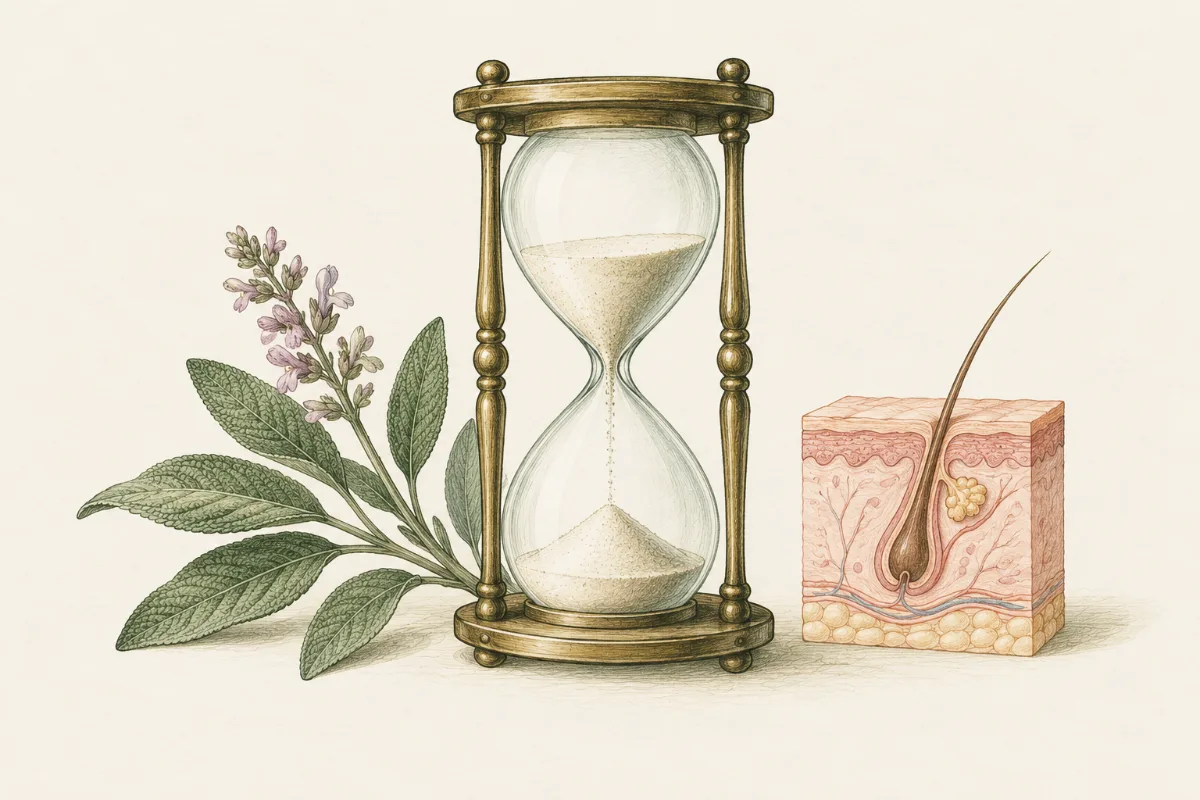
Menopause Acne Causes
Acne can persist or first appear around menopause. Hormonal changes are one possible contributor, alongside other factors; new breakouts do not establish a specific hormonal diagnosis.
Why acne can return during this transition
Multifactorial menopausal acne: Menopausal acne review (PubMed).
Research on acne around the menopause transition has found something that surprises a lot of people: androgen levels in these women are often still within a normal range. It’s not that androgens spike — it’s that estrogen falls relative to androgens, and that shifting ratio is enough to stimulate the sebaceous glands and trigger flares. As hormones reach this “tipping point,” the new balance between estrogen and androgen can be enough to cause breakouts even without a technical androgen excess.
This is part of why menopausal acne can feel confusing — it often arrives alongside dryness and other signs of estrogen decline, which seems contradictory (oily-enough-to-break-out and dry at the same time), but both are downstream of the same hormonal shift. See our full Perimenopause Skin Care Guide for the broader picture of what’s changing.
How it tends to look
Similar to other hormonal acne patterns, breakouts at this life stage tend to concentrate on the jawline and lower face, and can be deeper and more inflamed than typical teenage acne. See Hormonal Acne vs. Regular Acne for the full comparison.
What helps
Acne treatment and skin-care adaptation: 2024 acne guideline (PubMed); AAD menopause skin care.
The gentle, one-active-at-a-time approach in our skincare routine for hormonal acne applies here too, with one added consideration: skin at this life stage is often more reactive and barrier-compromised than it was in your 20s or 30s, so:
- Start with the gentlest options — azelaic acid is a reasonable first choice
- Pair any active ingredient with a ceramide-rich moisturizer, since dryness and breakouts are often happening simultaneously
- Watch for signs of barrier damage (stinging, tightness, flaking) if you’re using acne actives alongside already-drier skin — see our Skin Barrier Repair guide if that’s showing up
Related Dermlore guidance
Products mentioned in this guide
Dermlore may earn a commission from qualifying purchases made through links on this page, at no additional cost to you. As an Amazon Associate I earn from qualifying purchases.
- The Ordinary Azelaic Acid Suspension 10%, Formula for Uneven and Blemish-Prone Skin — The Ordinary · 1 oz, pack of 1. Azelaic acid 10% suspension; 1 oz tube.
- CeraVe PM Daily Facial Moisturizer, Skin Care for Dry Skin, Oil-Free, 3oz — CeraVe · 3 oz. Facial lotion with ceramides; 3 oz.
When to see a doctor
Persistent, severe, scarring or distressing acne warrants a dermatologist’s assessment. Acne treatments should be chosen for the diagnosis and individual risks. Menopausal hormone therapy is a separate decision based on menopausal indications, not a routine acne treatment.
FAQ
Is this the same as the hormonal acne I had in my 20s?
Related, but not identical — the underlying mechanism (relative hormone imbalance) is similar, but menopausal skin is also dealing with barrier changes and collagen loss at the same time, which affects how you should approach treatment.
Will this go away once I’m fully through menopause?
For many people, yes — once hormones stabilize post-menopause, breakouts often ease, though this varies by individual and some women continue to experience occasional flares.
Can hormone therapy help with menopausal acne specifically?
Menopausal hormone therapy is not a standard acne treatment in the acne guideline. Discuss menopausal indications with your clinician and manage acne according to its own diagnosis and treatment plan.
References
- Menopausal Acne - Challenges And Solutions International Journal of Women’s Health · 2019
- Guidelines of care for the management of acne vulgaris Journal of the American Academy of Dermatology · 2024
- Caring for your skin in menopause American Academy of Dermatology
Dermlore provides general educational information, not personal medical advice, diagnosis or treatment. Reading this site does not create a doctor–patient relationship. Consult a qualified healthcare professional for advice about your circumstances. Medical disclaimer.