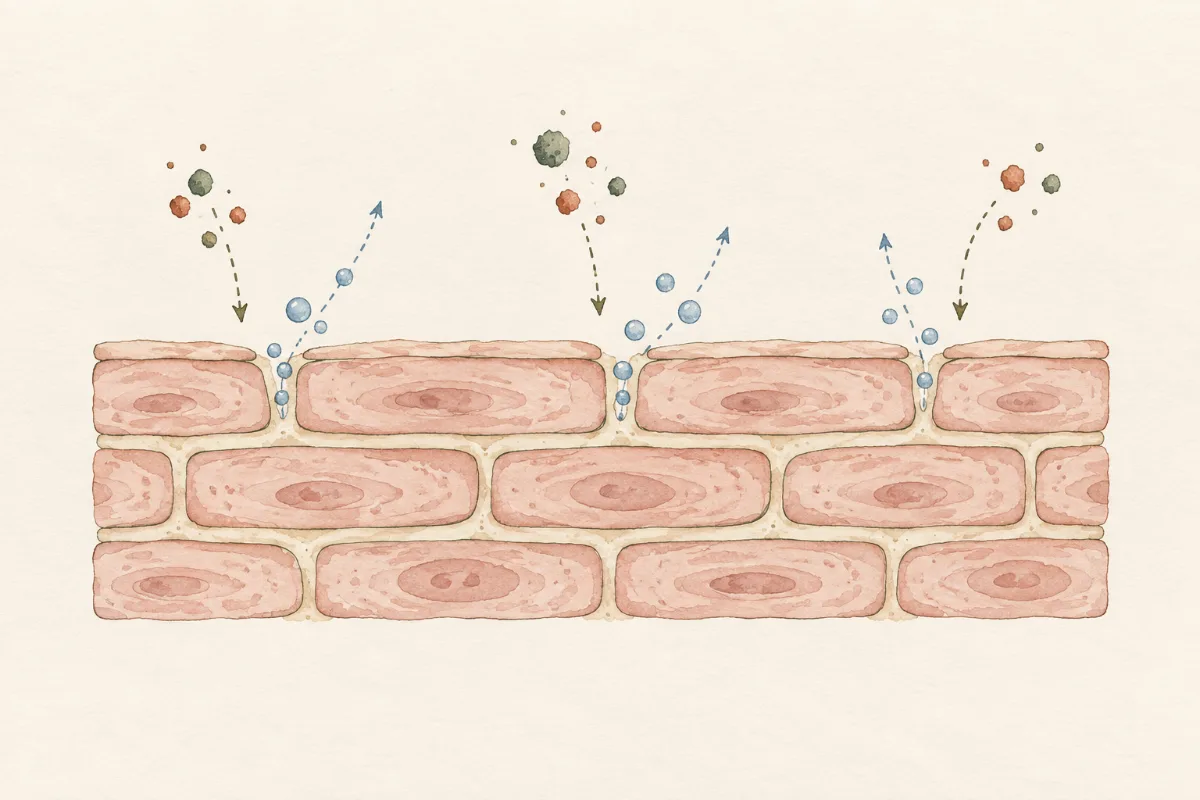
Signs of a Damaged Skin Barrier
Skin barrier damage can develop gradually enough that it’s easy to blame it on “just having sensitive skin” or the weather — but it usually has a specific cause, and specific signs that separate it from other skin issues. Here’s what to actually look for.
The core signs
Symptoms overlap with dermatitis: AAD contact-dermatitis symptoms.
- Stinging or burning with products you’ve used before. This is often the clearest sign — a cleanser or moisturizer that never bothered you suddenly causes noticeable stinging.
- Persistent tightness, even shortly after applying moisturizer. A healthy barrier holds onto that hydration; a damaged one lets it evaporate quickly (something dermatologists measure clinically as transepidermal water loss, or TEWL).
- Visible flaking or rough texture, especially around the cheeks, nose, or mouth
- Redness without an obvious trigger — no new product, no sun exposure, just persistent pink or blotchy skin
- New breakouts alongside dryness. This combination confuses a lot of people, but a compromised barrier lets irritants and bacteria in more easily even while the skin itself is under-hydrated.
- Dull, rough-looking skin that doesn’t respond to your usual products
What it can be mistaken for
Diagnosis may require assessment and patch testing: AAD dermatitis diagnosis and treatment.
- Ordinary dry skin — but plain dryness usually improves quickly with a good moisturizer; barrier damage often doesn’t, because the underlying lipid structure needs to rebuild, not just be hydrated on the surface
- An allergic reaction — possible, but allergies usually involve more localized, sudden swelling or hives, and don’t typically resolve with the “simplify everything” approach that works for barrier damage
- Naturally sensitive skin — some people are simply more reactive by nature, but barrier damage is acquired, tied to a specific cause, and — importantly — usually reversible with the right approach
Common causes worth checking against
If several of the signs above sound familiar, think back over the past few weeks:
- Started a new retinoid or increased how often you use one? See Retinol-Damaged Skin
- Added an exfoliating acid, or using more than one at a time? See Over-Exfoliated Skin: How to Fix It
- Switched to a hotter shower routine, a foaming cleanser, or started double-cleansing?
- Spent extended time in harsh wind, dry indoor heat, or sun without adjusting your routine?
What to do next
If a new product seems to irritate your skin, simplifying non-prescribed skincare may help while you seek advice. Similar symptoms can have different causes, and persistent or severe symptoms need assessment. Our full Skin Barrier Repair Routine walks through exactly what to pause and what to add. If you suspect irritation, consider pausing recently added non-prescription actives while checking any prescribed treatment with your clinician; switch to a gentle cleanser, and use a moisturizer built around ceramides, cholesterol, and fatty acids together.
Related Dermlore guidance
How long until it improves
How quickly irritated skin improves varies with the cause and severity. If symptoms worsen, are severe or persist despite gentle care, seek an individual assessment rather than relying on a fixed recovery window. Full details, including what affects your specific timeline, are in How Long Does It Take to Repair a Skin Barrier?
When it’s more than a skincare fix
See a dermatologist if symptoms are severe, spreading, persistent or recurrent, or if you suspect eczema, allergy or rosacea. Seek prompt medical assessment for possible infection, including increasing pain, warmth or oozing.
FAQ
Can barrier damage happen from just one bad product, or does it take weeks?
Both are possible. A single very strong exfoliant or a reaction to a new product can cause acute damage quickly; more often, it builds gradually from a routine that’s slightly too aggressive over several weeks.
Is stinging always a sign of damage?
Not always — some active ingredients (like vitamin C or exfoliating acids) cause mild, brief tingling in healthy skin as part of normal use. The distinction is whether it’s a familiar, brief sensation or a new, persistent stinging with products that never used to cause it.
Can oily skin have a damaged barrier too?
Yes — oiliness and barrier damage aren’t opposites. Oily skin can still lack the ceramides needed for a healthy barrier, and can absolutely become damaged from over-cleansing or over-exfoliating, which is common precisely because oily skin is often treated more aggressively.
References
- Eczema types: Contact dermatitis signs and symptoms American Academy of Dermatology
- Eczema types: Contact dermatitis diagnosis and treatment American Academy of Dermatology
Dermlore provides general educational information, not personal medical advice, diagnosis or treatment. Reading this site does not create a doctor–patient relationship. Consult a qualified healthcare professional for advice about your circumstances. Medical disclaimer.